

Calculators
Enchanting route cost calculator
Compare buying an enchanted item with buying a lower enchantment and upgrading it using runes, souls and relics.
All calculators · How this calculation works
Calculators



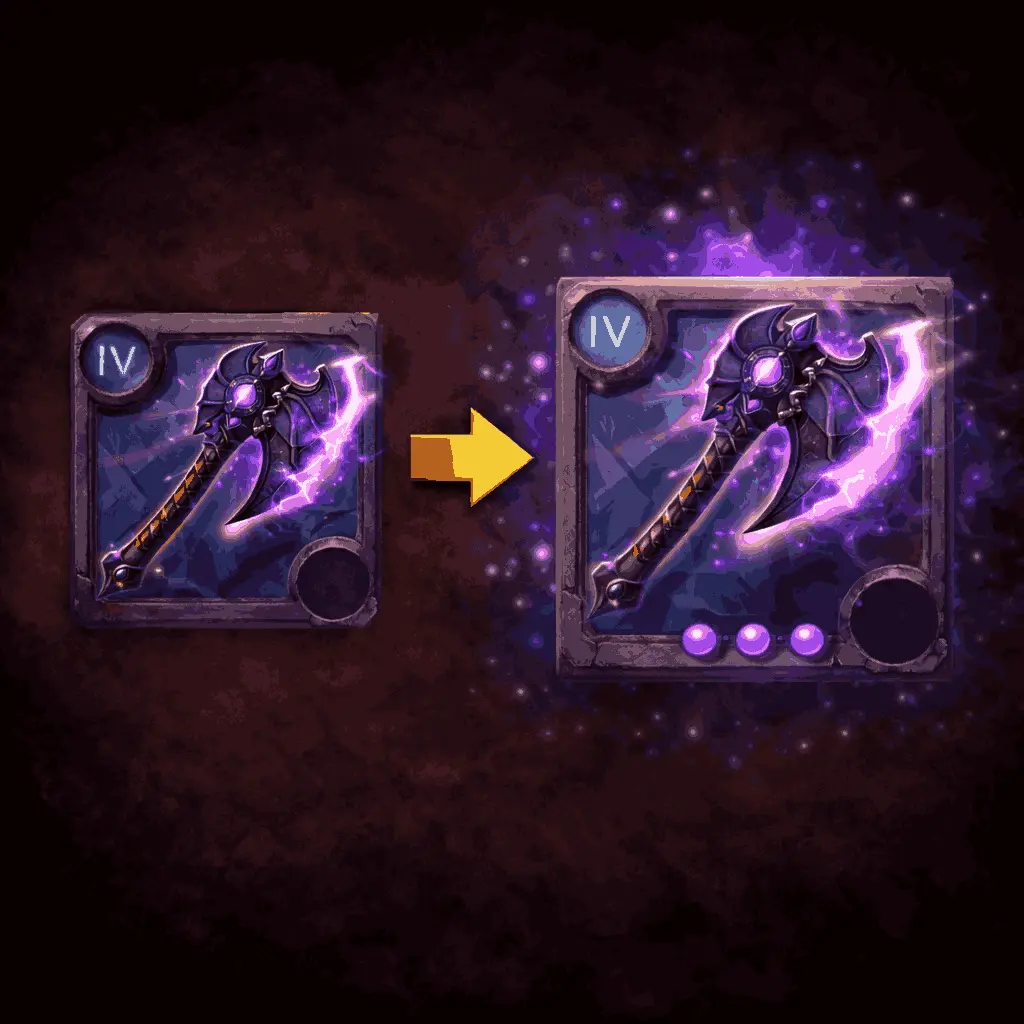


Select item
Search and pick a weapon or armor piece.
The calculator will show each upgrade step from .0 to .3.
Calculation guide
How to use the enchanting route cost calculator
The examples below use illustrative inputs to explain this tool. They are not live prices or game recipe tables. Check the selected recipe and in-game settings before using a result.
Choose the same item and quality on both sides
Search for the item, select quality, and set the starting and target enchantments. AU models the supported .0 to .3 upgrade steps: runes, then souls, then relics. The resource amount depends on the item. Check the selected variant instead of assuming every helmet, weapon and armor uses the same quantity.
The comparison is between acquisition routes for the same output. Changing quality or server between the starting and target prices compares different goods. A target price with no usable observation is not a free direct-purchase option.
Add every step in a multi-stage upgrade
Assume a lower-enchantment item costs 20,000 silver. In an invented two-step route, the required runes cost 3,600 in total and the souls cost 7,200. Buying and upgrading costs 30,800. Against a 34,000 direct-purchase price for the identical target, the acquisition saving is 3,200 silver.
If you already own the lower item, the additional silver needed is 10,800, but the economic route cost still includes the item you could otherwise sell. Owned resources have the same opportunity cost. Ignoring the first upgrade step or the starting item overstates the saving.
A purchase saving is not resale profit
Reselling the example target at 34,000 with an assumed 4% tax would leave 32,640. That is only 1,840 above the 30,800 acquisition cost before listing and transport costs. The 3,200 displayed purchase saving and the resale margin answer different questions.
Inspect each step’s resource price and compare the final total with an executable target-item offer. AU’s enchanting comparison does not mean that a buyer will pay the direct-purchase listing price. Check the actual demand side if your plan is immediate resale.
Worked examples and guides
Read buy orders, sell orders, and market averages
Use a worked transport example to distinguish a visible spread from an executable trade, account for market depth, and decide when an observation is too weak to use.